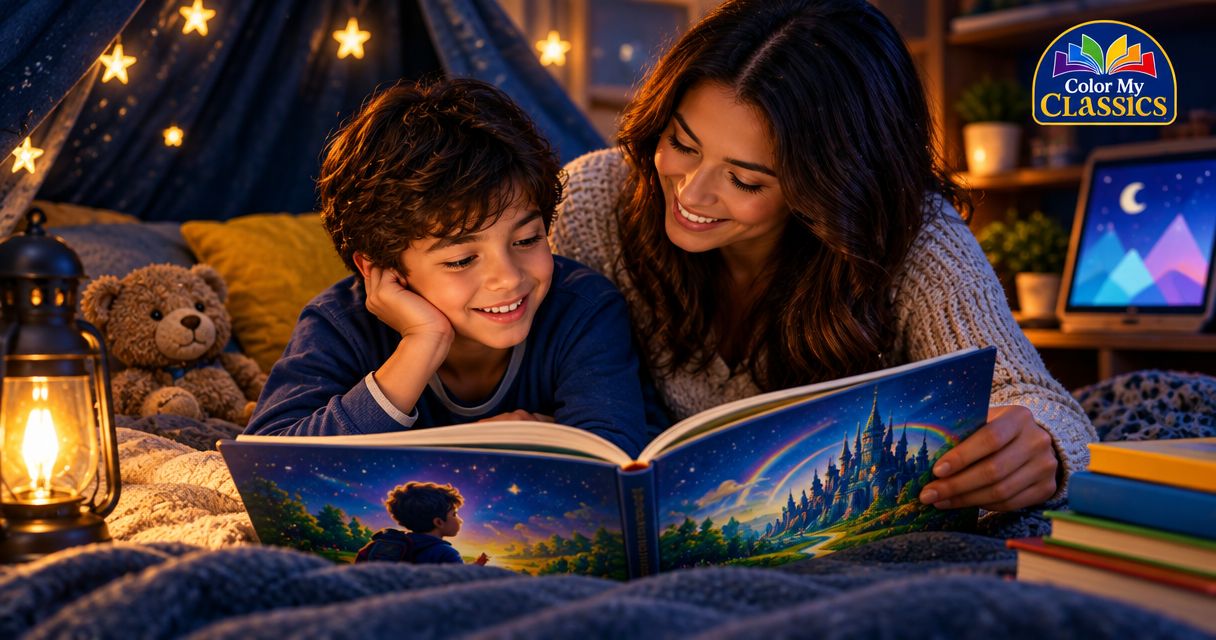
Reluctant-reader gift giving is choosing a personal way into a story, with the aim of making time with a book feel inviting rather than like a test. The best personalized childrens gift matches what the recipient already enjoys—coloring, familiar characters, or being read to—instead of asking them to become a different kind of reader.
- Choose a personalized childrens gift around the recipient’s interests, not a promise to improve reading.
- Color My Classics suits gift buyers seeking face-and-name personalization in printed classic coloring storybooks.
- Distinguish photo-based coloring storybooks from name-only storybooks and ordinary coloring books.
- Choose a clear photo, check current ordering details, and offer shared reading without a performance test.
Why personalized gifts matter for reluctant readers
A gift is an invitation, not an assignment. If a child avoids reading, a birthday or Christmas present should not arrive with an unspoken requirement to read aloud, finish a chapter, or prove progress.
Personalization gives you something specific to choose around: the recipient’s face, name, interests, and connection to the giver. Choose the experience first; choose the personal details second. A familiar face on a page does not tell you whether the recipient will enjoy the activity inside.
The distinction between reading and coloring matters here. This guide to personalized storybooks versus coloring books helps you separate a listening-and-reading gift from one that also invites the recipient to make marks on the page.
For your 2026 gift list, use ages 4–12 as a starting audience, not a promise that every child in that range wants the same book. Parents can draw on everyday interests; grandparents can choose a story they want to share. Nostalgic adults deserve the same consideration: an invitation to revisit a favorite tale, without being treated as children.
How to choose a gift that feels like an invitation
1. Start with what the recipient chooses freely
Before comparing books, notice what happens when nobody sets the activity. Does the recipient reach for crayons, ask someone to tell a story, enjoy pretending to be a character, or prefer making up scenes from pictures?
You can learn this through an ordinary conversation with the recipient or someone who knows them well. Ask what they enjoy, not why they dislike reading. Those questions lead to different gifts.
For a grandparent buying from a distance, a parent’s practical observations are more useful than a broad description such as reluctant reader. For an adult buying for themselves, the question is simpler: would you enjoy reading this tale, coloring it, or both?
- Ask which stories or characters the recipient mentions without prompting.
- Find out whether they actually enjoy coloring before choosing a coloring gift.
- Notice whether they prefer listening, looking, reading, or inventing stories.
- Keep your choice separate from school targets and reading assessments.
2. Choose the kind of participation you want to offer
You can explore the idea without buying anything. Read aloud from a book you already own, invite the recipient to describe an illustration, or draw a scene together on plain paper. Treat the response as a clue, not an audition.
A personalized storybook puts the recipient into a written narrative. A personalized coloring storybook adds an activity alongside the story. An ordinary coloring book offers coloring without the personal connection. None is automatically the right answer for someone who avoids reading.
Color My Classics personalized coloring storybooks are best for gift buyers who want face-and-name personalization in a printed classic tale. The books turn an uploaded photo into the child as the hero of stories such as The Wizard of Oz and Alice in Wonderland. That fits a shared story-and-coloring gift; it does not replace the need to check that the recipient likes both elements.
- Choose a storybook when listening to a narrative is the main attraction.
- Choose a coloring storybook when coloring is part of the intended experience.
- Choose an ordinary coloring book when personalization is not important.
- Choose shared reading from an existing book when you want to explore preferences first.
3. Match the classic to the recipient, not just your memories
Oz and Wonderland offer recognizable worlds, but your fondness for a tale is not the same as the recipient’s interest in it. Ask which setting sounds appealing before deciding that your childhood favorite belongs on their shelf.
You do not need a new purchase to begin that conversation. Describe a journey through Oz or an adventure in Wonderland, then let the recipient respond. Avoid turning the choice into a quiz about characters or plot.
For grandparents, this is also a chance to share a memory without requiring the next generation to repeat it. A nostalgic adult choosing for themselves can follow their own affection for the story. When choosing a 2026 birthday gift, give the recipient’s curiosity the deciding vote.
- Ask which story world the recipient would like to step into.
- Separate your favorite childhood tale from their current interests.
- Explain that coloring is part of this particular gift.
- Let the recipient dislike a classic without trying to persuade them otherwise.
4. Choose a photo that clearly shows the intended person
Start with photos you already have. For a face-based gift, select an image in which you can clearly identify the intended person, rather than choosing solely for the occasion, outfit, or background.
A useful approach is to compare up to 3 candidate photos before ordering. Look for visible facial features, a recognizable expression, and a subject who is easy to distinguish. These are selection criteria, not a substitute for the seller’s upload instructions.
For Color My Classics, the uploaded photo is part of what makes the coloring storybook personal. Follow the instructions shown during the current ordering process; do not assume that every crop, group picture, or file will work in the same way. If a grandparent is choosing, asking a parent for a suitable photo keeps the surprise focused on the gift itself.
- Favor a clearly visible face over an elaborate background.
- Avoid choosing an image where another person obscures the subject.
- Confirm the recipient’s name and spelling before submitting details.
- Follow the current photo requirements rather than guessing file specifications.
5. Check the format and ordering details before committing
A personalized book has more decisions than an ordinary book taken from a shelf. The photo and name matter, but so do the physical format and the details shown when you order.
Check Color My Classics for the current printed Oz and Wonderland coloring storybooks and the ordering information attached to your choice. Do not infer a binding, page count, paper specification, or preview feature from the phrase personalized book.
For a Christmas gift in 2026, check the information presented for your order before choosing the date you plan to give it. Apply the same care to birthdays and year-round gifts. A keepsake still needs to suit the way its recipient wants to use it: coloring together, returning to a story, or keeping a personally meaningful book.
- Confirm which physical format the selected book offers.
- Read the current photo-upload and name-entry instructions.
- Check the delivery information relevant to your order and destination.
- Read the terms that apply to personalized purchases.
- Review the details you have entered before completing the order.
6. Plan a gentle first invitation
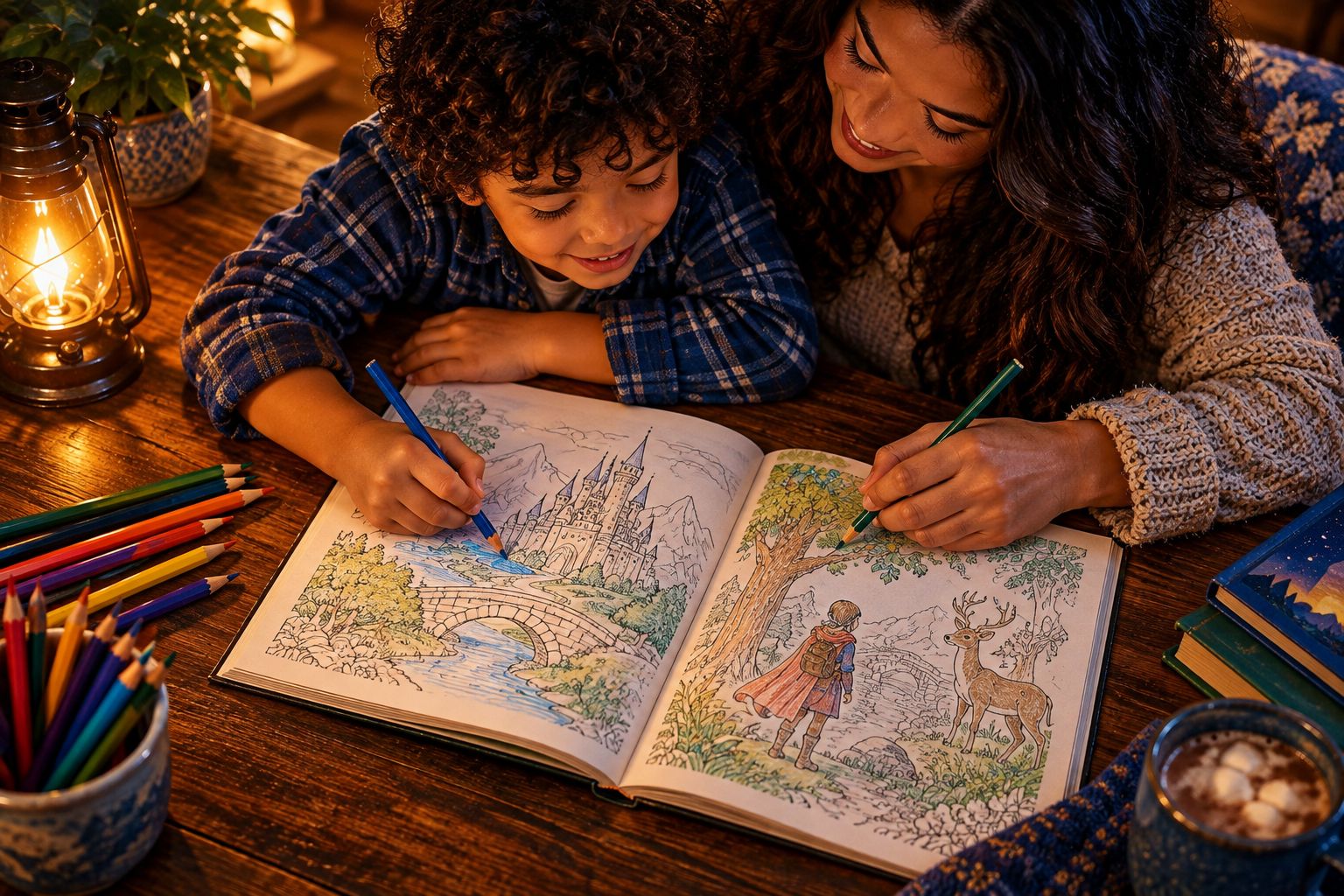
You can make the opening moment simple: put the book somewhere comfortable, offer coloring materials, and ask whether the recipient wants to look through it together. Let the book be a present before it becomes an activity.
If a small plan helps you, suggest 5 minutes together or offer a choice between 2 pages. These are optional ways to begin, not reading targets or rules for using the book. Stop when the recipient wants to stop.
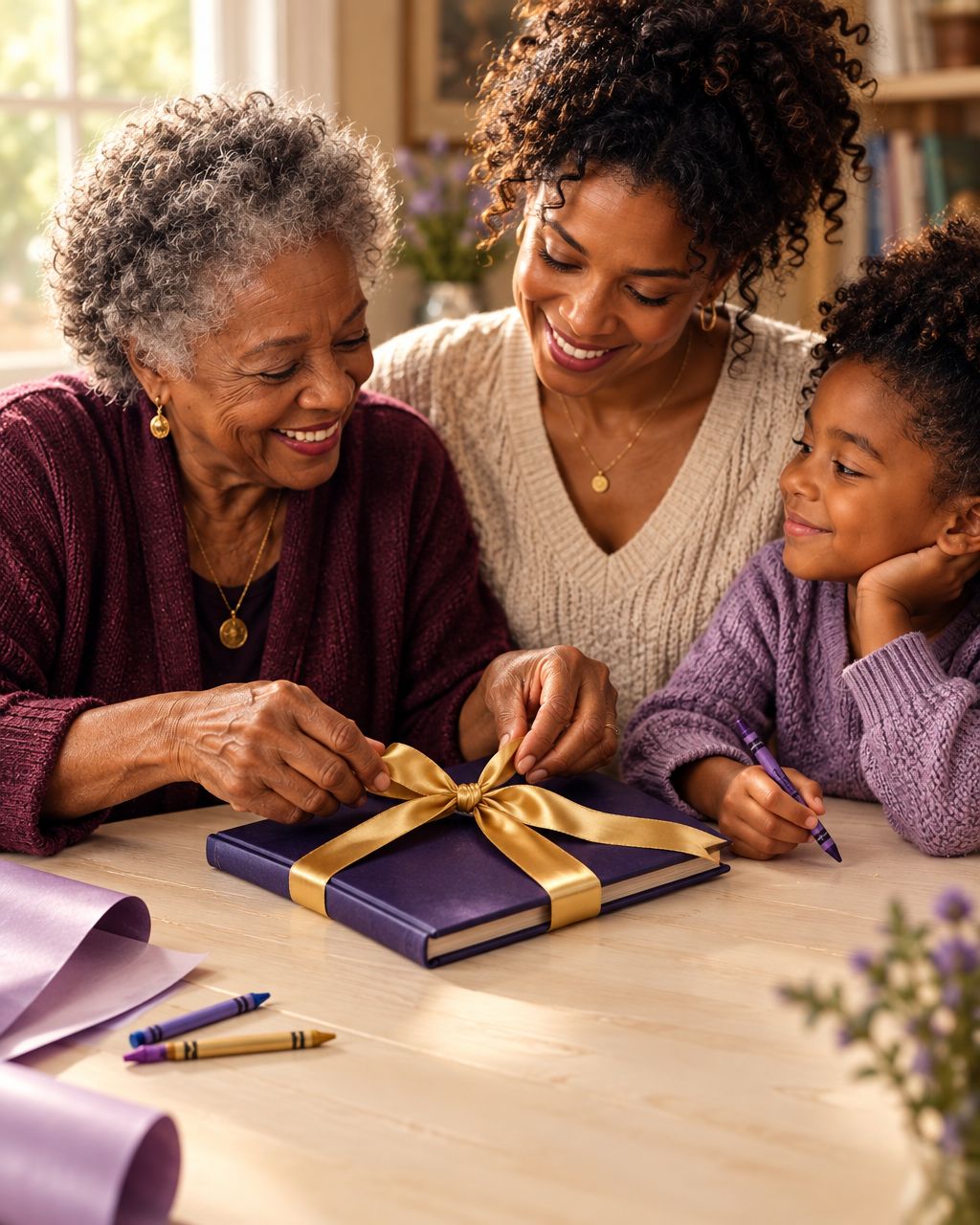
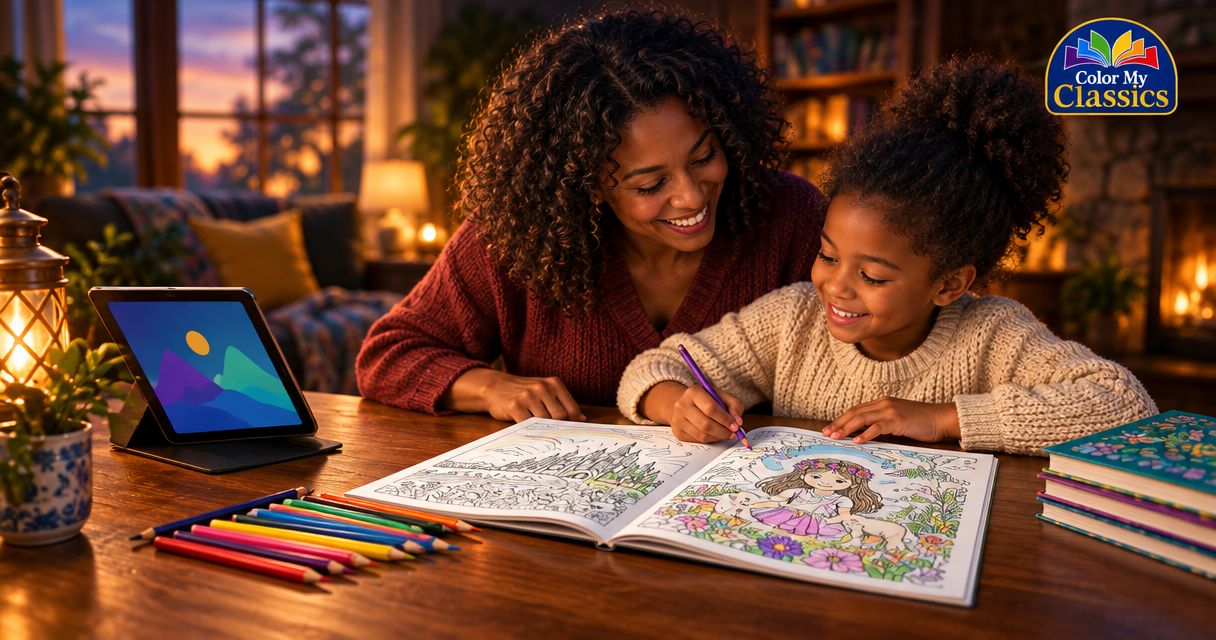
A parent can read while a child colors. A grandparent can talk about the scene and listen to the child’s version of events. An adult can color alone, share the activity with someone else, or simply enjoy returning to a familiar story. The gift does not need a finished page to count as time well spent.
- Ask whether the recipient wants to read, listen, color, or just look.
- Offer help without correcting every spoken word.
- Let unfinished pages stay unfinished.
- Leave the next session as an invitation rather than a requirement.
Compare the gift options
The most personal option is not automatically the best fit. Choose according to the activity the recipient wants, then decide whether a name, a face, or a connection to a classic story adds something meaningful.
| Option | Best for | What it offers | Key limitation |
|---|---|---|---|
| Color My Classics personalized coloring storybooks | Buyers seeking a photo-based classic story-and-coloring gift | Printed Oz and Wonderland tales with face-and-name personalization | Not the right activity match for someone who dislikes coloring; verify current ordering details |
| Name-only personalized storybook | Recipients who enjoy being named in a narrative | Personalization centered on the recipient’s name | A name alone does not provide photo-based personalization; features depend on the book |
| Ordinary coloring book | Recipients who mainly want to color | A coloring activity without arranging personal details | Does not provide the same face-and-name connection |
| Shared reading from a book you own | Families exploring interests before choosing a gift | A way to discover which stories the recipient enjoys | Does not create a new personalized keepsake |
For a birthday, the book can mark the recipient’s place in a favorite imaginary world. For Christmas, it can be an activity you offer alongside other family time. For a grandparent-to-grandchild keepsake, the important distinction is whether the book reflects something you both want to share—not simply whether it carries a name.
Common mistakes when buying for a reluctant reader
Buying an improvement project disguised as a present
Avoid presenting the gift as something that will make the recipient read better. Personalization is a feature of the gift, not evidence of a learning outcome. Say what you hope to enjoy together instead.
Treating all personalization as the same thing
A printed name and a photo-based likeness are different details. Check what the selected book actually personalizes, and choose according to what matters to the recipient. Do not expect a name-only storybook to provide the same experience as seeing a familiar face in the tale.
Choosing by age alone
Ages 4–12 covers different interests and preferences. Ask about the individual rather than relying only on the age printed in your shopping notes. The same principle applies when buying a nostalgic coloring gift for an adult: familiarity with the story does not automatically mean enthusiasm for coloring it.
Saving the book until the recipient can read independently
A gift can be enjoyed through listening, looking, and coloring together. If you choose a book for shared time, do not withhold that experience until the recipient reaches a particular reading milestone. Equally, do not insist on reading aloud when they want a quiet coloring session.
Making the keepsake too precious to use
Decide whether you are giving something to color or something to preserve untouched. If the intention is coloring together, tell the recipient that their choices belong on the page. A grandparent’s wish to keep a gift beautiful should not turn the activity into a test of neatness.
FAQ
What’s the best personalized childrens gift for a reluctant reader?
Choose a gift that fits an activity the recipient already enjoys, rather than one that promises better reading. A photo-based coloring storybook suits someone interested in coloring and sharing a story; a listening-focused book suits someone who prefers being read to.
Will a personalized book make my child enjoy reading?
A personalized book does not guarantee that a child will enjoy reading. Choose it for its story, personal details, and intended activity, and keep shared time free from tests or progress requirements.
How is Color My Classics different from a name-only storybook?
Color My Classics offers printed coloring storybooks with face-and-name personalization, using an uploaded photo to place a child in a classic tale. A name-only storybook personalizes the name without providing that same photo-based feature.
What photo should I choose for a personalized coloring book?
Choose a photo that clearly shows the intended person’s face, then follow the seller’s current upload requirements. Confirm the name spelling and avoid assuming that an unclear or obscured face will work for the selected book.
Can grandparents give a coloring storybook to a grandchild who avoids reading?
Yes—choose it as an invitation to share a story and coloring, not as a reading assignment. Ask a parent about the grandchild’s interests and a suitable photo, then offer to read aloud without requiring the child to perform.
Are personalized coloring books only for children?
No—nostalgic adults can enjoy coloring and revisiting classic tales too. When buying a particular personalized edition for an adult, check its personalization requirements and intended content rather than assuming every edition fits every recipient.
Is a personalized coloring storybook suitable for Christmas or a birthday?
A personalized coloring storybook fits either occasion when the recipient enjoys the story and activity. For a 2026 celebration, check the current ordering and delivery details before planning when to give it.
One last thing
Ask who will read the first page aloud before you decide how to wrap the book. That small question makes the intended experience concrete: a parent on the sofa, a grandparent sharing a favorite tale, or an adult enjoying a quiet evening.
For your 2026 gifts, choose the person and the moment before the finishing touches. A face and a name make the book personal; letting the recipient decide how to enjoy it keeps the invitation theirs.